A virtual reality driving simulator: a Latvian-made solution with global potential
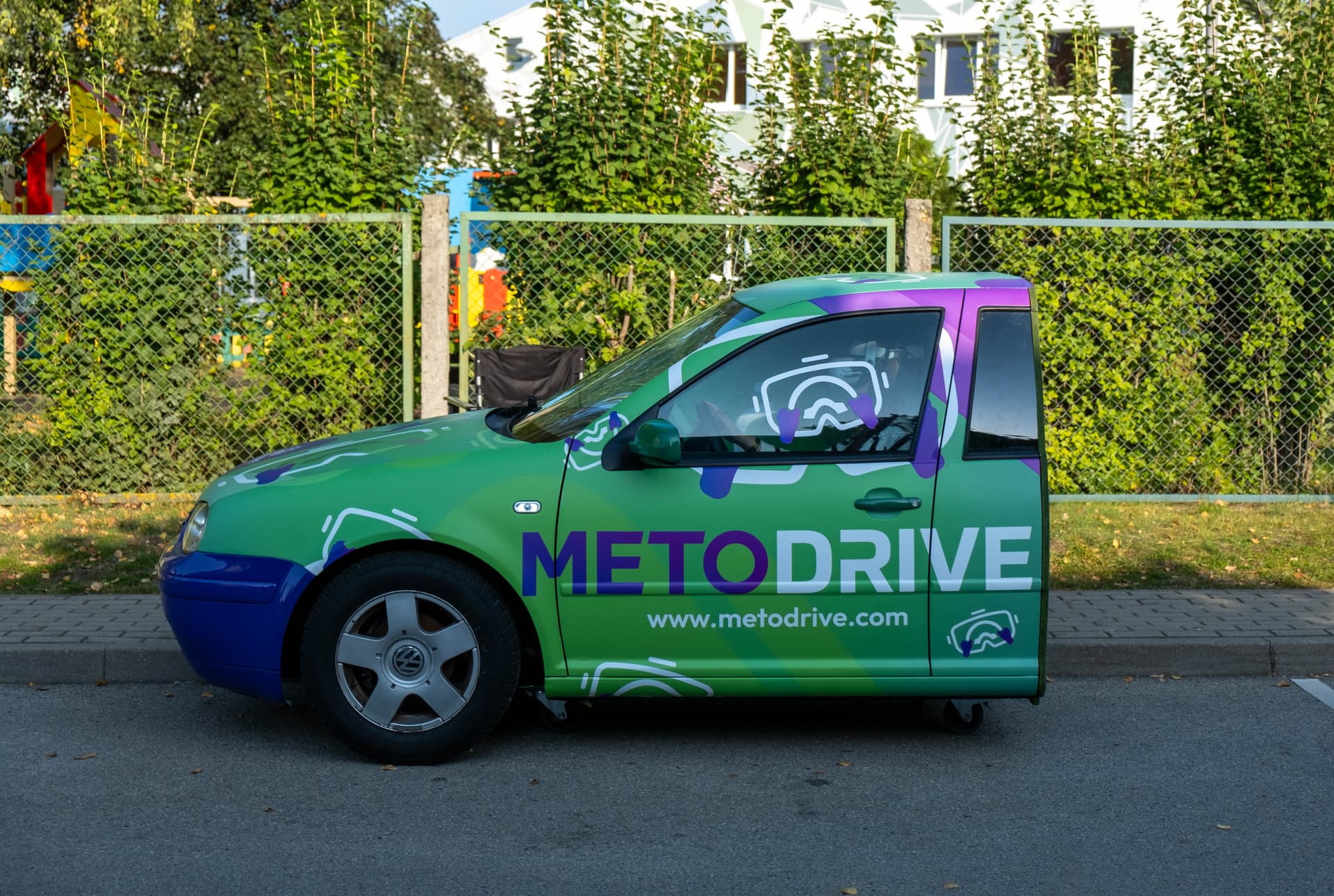
A Latvian-based technology start-up, headed by its founder Oskars Sniegs, has developed an innovative virtual reality (VR) driving simulator: an effective tool for both driver training and improving road safety. Unlike traditional driving simulators with multiple screens, steering wheels and pedals, the VR solution provides a full sense of presence. As the user turns their head, a full 360-degree visual environment is revealed, which changes following the user’s gaze. This allows users to not only learn technical driving skills but also provides them with the ultimate real-life driving experience.
The company develops both the equipment and the software itself, thus ensuring a high degree of flexibility and adaptability. The simulator is tailored to the specific needs of the customer, both visually and in terms of content. In about two months, you can create a detailed traffic environment for almost any city in the world, incorporating different languages and specific training scenarios.
The company’s activities are currently focused on three areas: driving schools, safe driving training in extreme conditions, and training for people with disabilities. In driving schools, the simulator serves as a convenient and safe way to learn initial driving skills and the logic of road traffic. Safe driving training simulates situations that are rare or potentially dangerous in real life, such as icy conditions, sudden obstacles on the road or other situations with high risks for accidents. The third area – developing solutions for people with functional impairments – is becoming increasingly important. The simulators are tailored to assess a person’s readiness to drive and to help develop specific skills. Alternative control systems are used, such as hand controls or the possibility to use the simulator without leaving the wheelchair.
While demand for such solutions is still relatively low in Latvia and the simulator is not recognised by legislation as an official training method, the situation is much more advanced elsewhere in Europe. In Finland, up to half of driving lessons are virtual, while in France, the first lessons must be taken in a simulator before you can get behind the wheel of a real car. That’s why the company’s focus is on export markets. The first simulator has already been sold to an occupational therapy provider in the United States, where it is used to assess and train people with functional impairments. And just this spring in Romania, the company implemented an ambitious cooperation project that has trained more than 400 employees of an electricity supply company who work in difficult and dangerous conditions daily.
The company offers two main products: the equipment itself, which can be adapted to the specific needs of each customer, and a training service to simulate safe driving or crisis situations. In the latter case, the equipment is provided for a fixed period for training at a specific company or other selected location.
The development of the product started about three years ago and the Latvian Investment and Development Agency (LIAA) innovation voucher programme provided significant support in this process – the foundational software of the simulator was developed in cooperation with the Vidzeme University of Applied Sciences. The company is also using the LIAA start-up support instrument in the form of tax incentives to attract specialists, which is of particular importance in the field of high value-added technologies.
Mr Sniegs only entered the world of technology when he was about 40 years old, when he switched professions and started studying at the Vidzeme University of Applied Sciences. The knowledge he gained about VR solutions and his desire to create a practical, public safety-oriented product led to this solution. The driving simulator was also chosen because it allows to take advantage of VR even in physically constrained environments – everything happens sitting down, thus maximising the potential of the technology.
After several years of intensive development, active sales work has only started in the last six months, therefore the company’s current focus is exploring export markets and attracting partners.