Ships equipped with furniture manufactured in Latvia travel across the world’s oceans
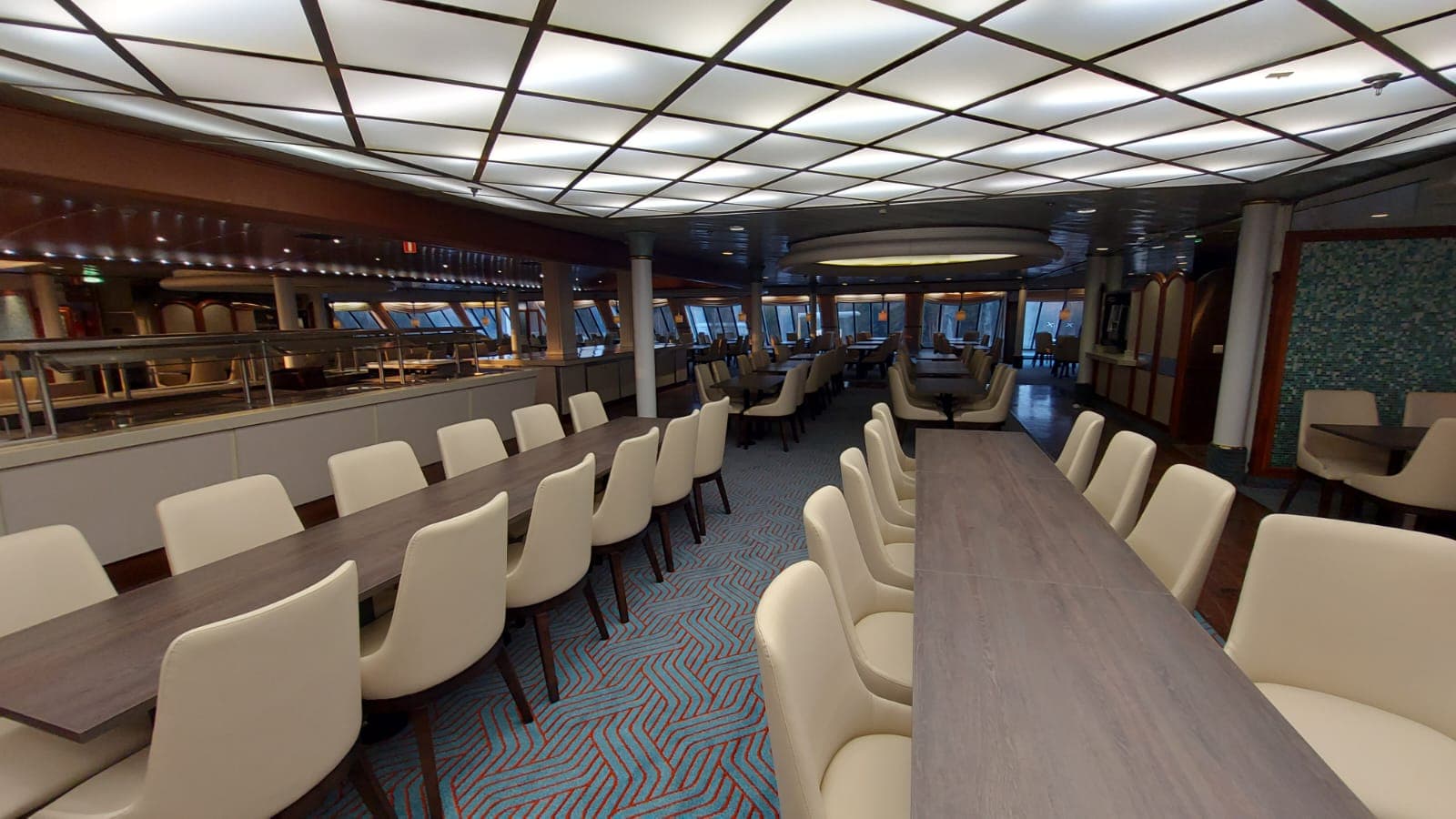
Rēzekne-based company SMART Interior manufactures hull and interior furniture for ships. The company’s activity covers the entire cycle, from design and manufacturing to full installation on board the ship. The company equips new ship equipment and takes part in renovation projects. The company was founded in 2019, but its CEO Viktors Ivanovs has been working in the field of ship interiors since 2007. Initially, the company specialised only in furniture installation, and it was precisely this practical work experience that revealed the main problem: often the furniture intended for ships was of poor quality, which complicated installation and caused problems in operation.
“I saw that the quality was not what it should be. And then I had an idea: why not manufacture it ourselves? If we can install it, we can also make it,” says the CEO of the company.
Furniture for ships is very specific – it is designed to withstand vibration, movement, moisture, and salt water. Such equipment requires special materials and technologies, including fireproof, shockproof, and moisture-proof solutions, as well as fastening systems that guarantee stability even in strong waves.
The knowledge and contacts accumulated in this industry allowed the company to receive its first orders shortly after its establishment. The first projects proved to be very successful, which allowed the company to purchase specialised production equipment and open a production facility in the Rēzekne Industrial Park.
Although the company’s start coincided with the pandemic, SMART Interior was able to develop without using the state support mechanisms available at the time. At the same time, from the very beginning, it also took part in the LIAA business incubator in Rēzekne, actively using the opportunities offered by the program: co-financing for the purchase of equipment, development of marketing and visual materials, rental of premises, and various training courses. The CEO believes that this support was one of the factors that allowed the company to overcome the difficult period more confidently and stably.
Focus on exports
Currently, the company not only manufactures deck and interior furniture for ships (for cabins, restaurants and recreation areas) but also offers individual interior and furniture solutions for private individuals and real estate developers. However, this direction accounts for only a small part of the total volume of work, as the company’s main specialisation remains ship interiors. Approximately 60-70% of production is exported, with the main markets being Estonia, Lithuania, France, Finland, and Germany. The company’s clients are mainly shipbuilding and equipment companies with which it collaborates on international projects.
Interestingly, the well-known Baltic ferry Isabelle, owned by Tallink, was also furnished with furniture manufactured by SMART Interior and, after reconstruction, now sails on Canadian routes. The company has also collaborated with Estonian partners to supply furniture for Royal Caribbean cruise ships. “I am proud to say that furniture manufactured in Latvia is now sailing the seas all over the world,” emphasizes Mr Ivanovs.
The company acknowledges that competition in the market is currently most affected by Chinese products, which are significantly cheaper, but often do not meet the necessary shipping standards. That is why the company focuses on high-quality solutions and technological advantages.
A new direction: solid wood furniture production for the Swedish market
The company is currently working on another potential area of development: the production of solid wood furniture for homes, offices, and frame house construction, with a particular focus on the Swedish market. Such products could also potentially be used in the future for luxury ship fittings.
To implement this idea, a new 2000–2500 m² production facility is needed, as the existing premises are not suitable for expansion. Investments in construction and equipment are estimated at around EUR 1 million, and negotiations are currently underway with potential investors from Sweden.
The company acknowledges that one of the future challenges in developing this area will be attracting a skilled workforce. “There are not many specialists in Rēzekne with experience in working with solid wood, because if local specialists have any experience in working with wood, it is mainly with chipboard. Therefore, attracting employees will be one of the biggest challenges, and we are considering inviting them from other nearby cities,” says the CEO of the company.
Information material prepared with the support of the European Regional Development Fund
