Līgatne Paper Mill reborn: producing innovative paper beloved by artists
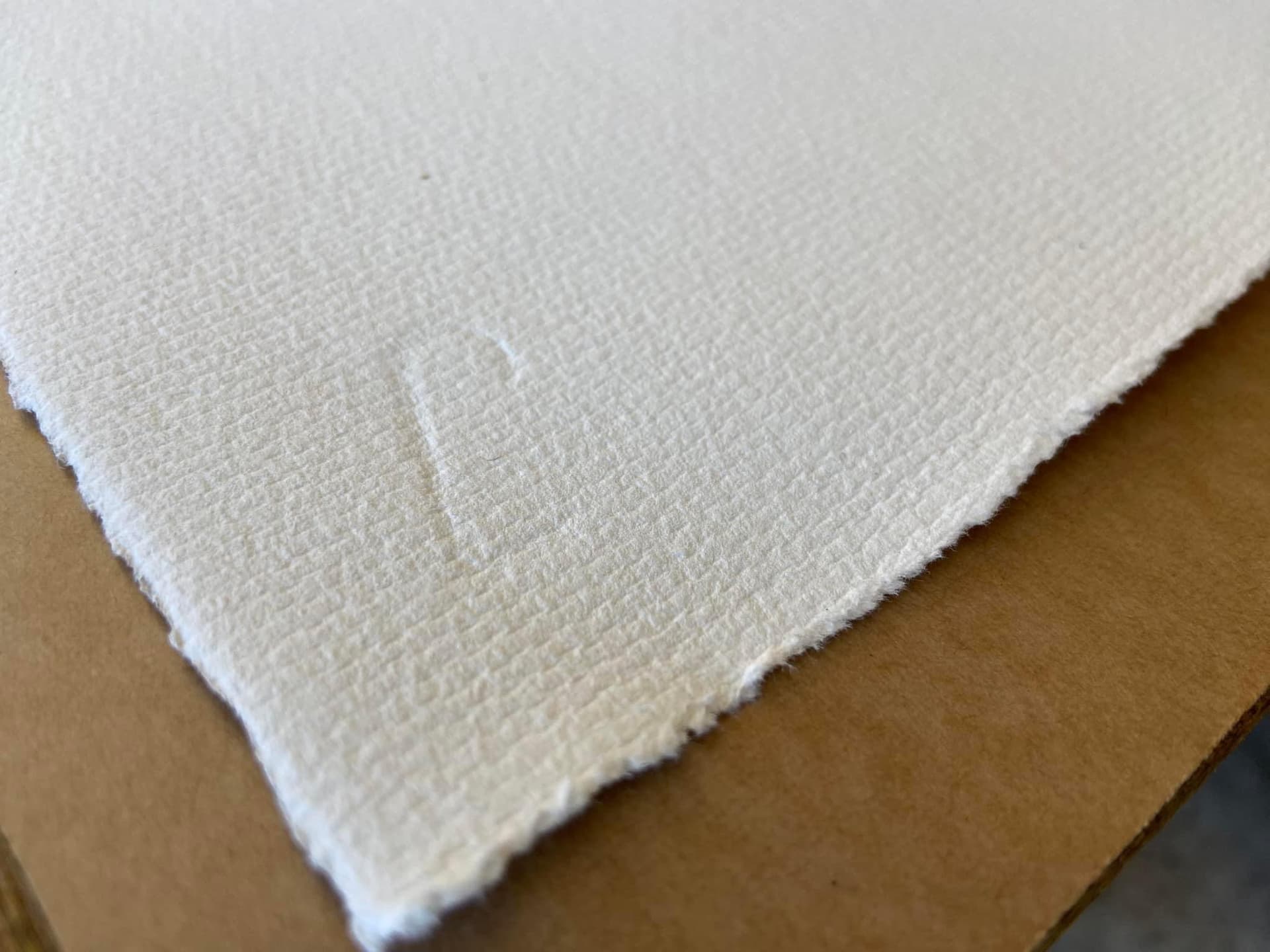
The history of Līgatnes Papīrfabrika [Ligatne Paper Mill] dates back more than 200 years, and today the Paper Mill has been reborn – after a lengthy pause it is again producing paper.
The company has chosen to specialise in the production of high-quality cotton paper, distinguished by its unique technology and recipe. This paper has already gained recognition among artists not only in Latvia, but also abroad, including Poland, Lithuania and countries as far afield as New Zealand, Canada and the United States. Production takes place on a unique paper-making machine developed in Latvia, the only one of its kind in the world. In parallel, the company is researching innovative materials, such as hemp fibres, from which to create new environmentally friendly products, including durable packaging materials.
Edgars Ricevs, CEO of the company, bought the Līgatne Paper Mill site at auction in 2022. The original vision was to develop the 12-hectare site as a multifunctional centre with housing, art spaces and creative workshops. The idea was inspired by the Finnish Fiskars village model, which combines tourism, culture and creative industries. However, plans changed when Edgars was approached by Sergejs Losjevs, an experienced paper technologist, who offered to restart paper production using a paper machine of his own design. This idea was the start of two years of intensive work, perfecting the machine and developing a unique paper recipe.
Unique technology and product
Resuming paper production in Līgatne required both hard work and a lot of research. “The production process is not easy,” Edgars Ricevs says. “In the first few years, we improved the equipment and tested different paper production technologies, and it was only about a month ago that we produced the first batch of paper according to the new, improved recipe, which we are ready to fully market.” In this time, the company has established a complete production cycle from raw material preparation to packaging of the finished product. The device, created in collaboration with Sergejs and his son, is unique and its design and construction as well as the installation and renovation of other equipment needed for paper production, required a significant investment of around EUR 1 million, not including the value of the site and buildings themselves. Some of the old equipment at Līgatne Paper Mill, such as the pulp mill, was modernised, preserving the historical infrastructure but adding new technologies.
The main product is premium watercolour paper made from cotton fibres without the use of acids and animal ingredients such as gelatine, which are commonly used in traditional watercolour paper production. This paper is durable, ultra-white, does not lose quality over time and is suitable for artists working directly with watercolours. Latvian artists were involved in the recipe development and testing of the paper, including Aleksandrs Neberekutins, President of the Latvian Chapter of the International Watercolour Society. The painters tested the experimental batches and gave feedback. “We went through the difficult process of creating a recipe from scratch,” says Edgars. “Our paper is neutral, ‘responsive’ and artists love working with it. We learnt all the knowledge of paper production on our own, by reading literature and meeting with papermakers abroad, because unfortunately this knowledge has been lost in Latvia.”
Innovation and sustainability
The company is also currently experimenting with hemp fibres to create innovative, environmentally friendly products, including durable cardboard for packaging. If the project is successful and obtains support, the possibility of using chitin as an alternative binder in paper production will also be explored in collaboration with scientists and potential partners in the veneer industry. These projects are at an early stage, but they mark the company’s ambition to become an innovation leader in the paper industry.

The production capacity is around 1000 tonnes per year, but it is currently not yet exhausted. At the same time, the company’s CEO stresses that it all depends on the market – the factory’s premises and accumulated know-how would also allow the installation of additional production equipment.
Strategy and global sales
The company is currently at a crossroads in choosing its future development strategy. One way to go would be to collaboate with the European paper and stationery giant F.I.L.A., which has shown interest in the efficient production technology and innovative approach of Līgatne Paper Mill. “They have large, energy-intensive mills in the UK and France, but our cost price is much lower,” Edgars explains. Collaboration with F.I.L.A. would mean guaranteed orders, but it would limit independence.

The other option is to work directly with wholesalers worldwide. About a year ago, the company contacted around 50 wholesalers abroad, of which 16 responded immediately, including from such countries as New Zealand, Canada, the United States and Saudi Arabia. “The Līgatne Paper Mill name provides credibility and recognition,” Edgars notes, pointing out that the historical value of the brand makes it easier to establish contacts. The third option is a combined model, working with both one large partner and smaller wholesalers, such as the Balts, the Baltic region subsidiary of printing house Jelgavas tipogrāfija, and Antalis in Northern Europe.
Small team with great ambition
Līgatne Paper Mill operates with a small team, the core of which is made up of just two permanent employees: Edgars and his colleague Mārtiņš, a former researcher at the Institute of Wood Chemistry specialising in pulp chemistry. Freelancers and partners, including mechanics and energy specialists, come in as additional resources. The company has invested in laboratory equipment (microscopes and other devices) to carry out research independently. There is a shortage of paper industry experts in Latvia, so plans include working with universities to offer research projects to PhD students.
As the location allows, a creative community is developing in the territory of the mill alongside paper production. It is home to other producers, including manufacturers of fermented and soft drinks, prefabricated buildings and wood products, as well as craftsmen and other creatives. The cooperation with the neighbouring chef Ēriks Dreibants’ Pavāru māja in Līgatne attracts tourists who visit both the restaurant and the paper mill.
Līgatne Paper Mill is also open to new ideas and partnerships. “We are ready to cooperate with anyone who wants to help develop the Latvian paper industry,” Edgars says. The company urges potential partners, distributors and researchers to get involved in order to jointly develop innovative solutions and strengthen Latvia’s manufacturing traditions in the global market.
Līgatne Paper Mill is also open to new ideas and partnerships. “We are ready to cooperate with anyone who wants to help develop the Latvian paper industry,” Edgars says. The company urges potential partners, distributors and researchers to get involved to jointly develop innovative solutions and strengthen Latvia’s manufacturing traditions in the global market.

*Information material prepared with the support of the European Regional Development Fund