An automated vertical growing container for tree seedlings, created in Latvia, mitigates climate change and serves as an outdoor installation
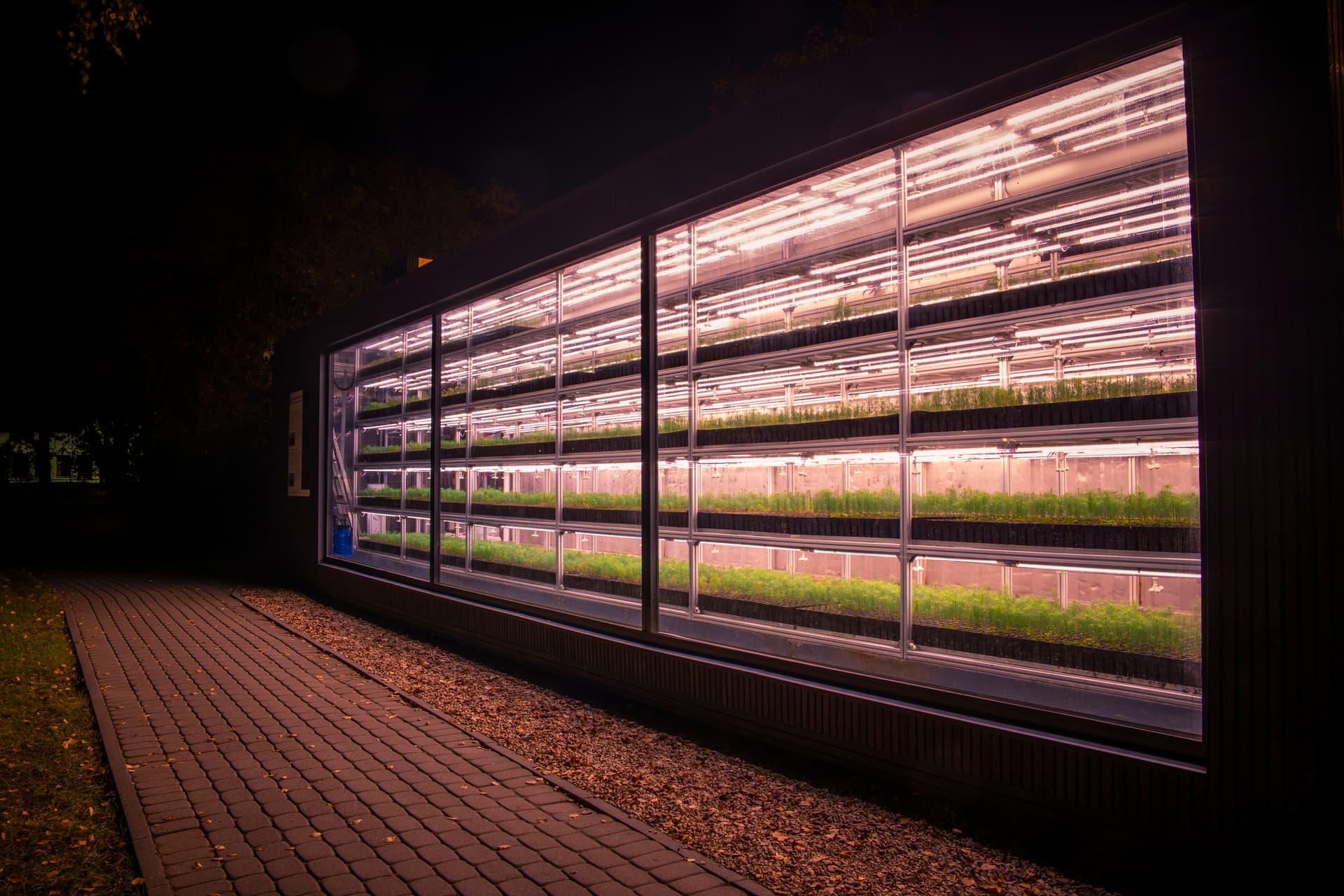
The company Carbon Less Future has created a unique and fully automated vertical growing container for growing tree seedlings. Vertical growing systems are not a new idea in horticulture, but until now they have mostly been used for growing strawberries, lettuce, and vegetable seedlings. The solution created in Latvia is the first to have been adapted specifically for tree seedlings, making it possible to grow seedlings in a controlled environment throughout the year. The main target audience for the company’s product is businesses and local governments that want to make a real contribution to the fight against climate change by growing seedlings on their own premises. An additional added value is that the container also serves as an outdoor installation and an educational element.
“The contribution of companies and local governments to sustainability and nature restoration is becoming an increasingly relevant topic, and companies want to visibly demonstrate their contribution in this area. It is likely that this trend will become even more pronounced in the future. At present, we often see international companies announcing their support for tree planting, but this often takes place somewhere far away, in a completely different country – without any clarity as to whether these trees are being planted and growing, and if they are growing, then where,” company representative Aigars Jacuks explains the relevance of the product.
It was precisely this lack of transparency that was the impetus for the development of an innovative solution. The vertical growing container allows tree seedlings to be grown in a visible, transparent, and controlled environment – both for companies implementing nature restoration projects and for local governments that want to create a practical and educational outdoor installation in their territories.
Fully autonomous seedling nursery
The container is not just a “greenhouse in a box”: it is a fully automated, sensor-equipped growing centre that can operate year-round, regardless of the season or weather conditions.
It features real-time sensors for air quality, soil moisture, and air flow control, as well as a recirculating water system with minimal consumption and the option to integrate solar panels for autonomous operation. All processes in the container are transparent and can be controlled via a mobile app.
Green thinking and circular economy principles are also incorporated into the design of the automated plant nursery itself: it is based on an up-cycled shipping container, which is covered with durable thermowood, ensuring both durability and an appealing natural look. One wall of the container is designed as a glass display window, allowing you to see and observe the growing process with your own eyes.
The first container is currently located in central square of Gulbene, where it serves as a publicly accessible outdoor installation and testing platform. Gulbene municipality supported the idea by allowing the company to use the space in the city centre, while the company itself covers the maintenance costs. “Schoolchildren and kindergarten groups often gather around the container. For children, seeing seedlings growing right here in the city, which will become large trees in the future, is like a small miracle, and it also demonstrates the educational aspect of this project,” says Aigars.
Knowledge through self-study and collaboration
The company was founded in 2022, and its team worked on developing the product on their own for several years. Aigars Jacuks, who has been involved in the project since the very outset, admits that neither he nor the company’s owner Aivis Garais, had any prior knowledge of seedlings or their vertical cultivation. However, with admirable perseverance and curiosity, they learned everything they needed to know step by step: visiting the Silava Forestry Institute, the Bulduri Horticultural Secondary School, consulting with industry experts, and experimenting with various technical solutions. “We started with an air conditioner and a couple of shelves and gradually played around with solutions. The ventilation and irrigation systems were adjusted several times to improve the micro-climate and achieve better plant growth,” Aigars recalls.
When the hard work on the technical development of the product was nearing completion, the company decided last year to join the business incubator set up in Gulbene by the Investment and Development Agency of Latvia, where it has taken advantage of mentoring opportunities and received support for accounting and office space. The team sees participation in the incubator not only as support for today, but also as an important foundation for the future, especially when production begins and the first orders are fulfilled, which will require investments in raw materials and technological equipment.
Focus on exports
Latvia is a country rich in forests, and the local market for this type of solution is limited: the country’s forests already provide huge quantities of seedlings. Therefore, the company is increasingly focusing its attention on exports. Particularly high potential lies in the Middle East, where the dry climate and lack of water create a need for effective, resource-saving greening solutions. This fall, with the support of the Investment and Development Agency of Latvia (LIAA), Carbon Less Future participated in an exhibition in Dubai, where it made valuable contacts and confirmed that there is interest in such a solution.
The company is currently continuing its market research, attracting its first customers, and improving its technology. Work is actively under-way on the integration of artificial intelligence – a camera will analyse plant development and automatically detect defects, further reducing human involvement and improving cultivation accuracy.
Information material prepared with the support of the European Regional Development Fund
