AP4PIC: State support helps tech companies focus on development
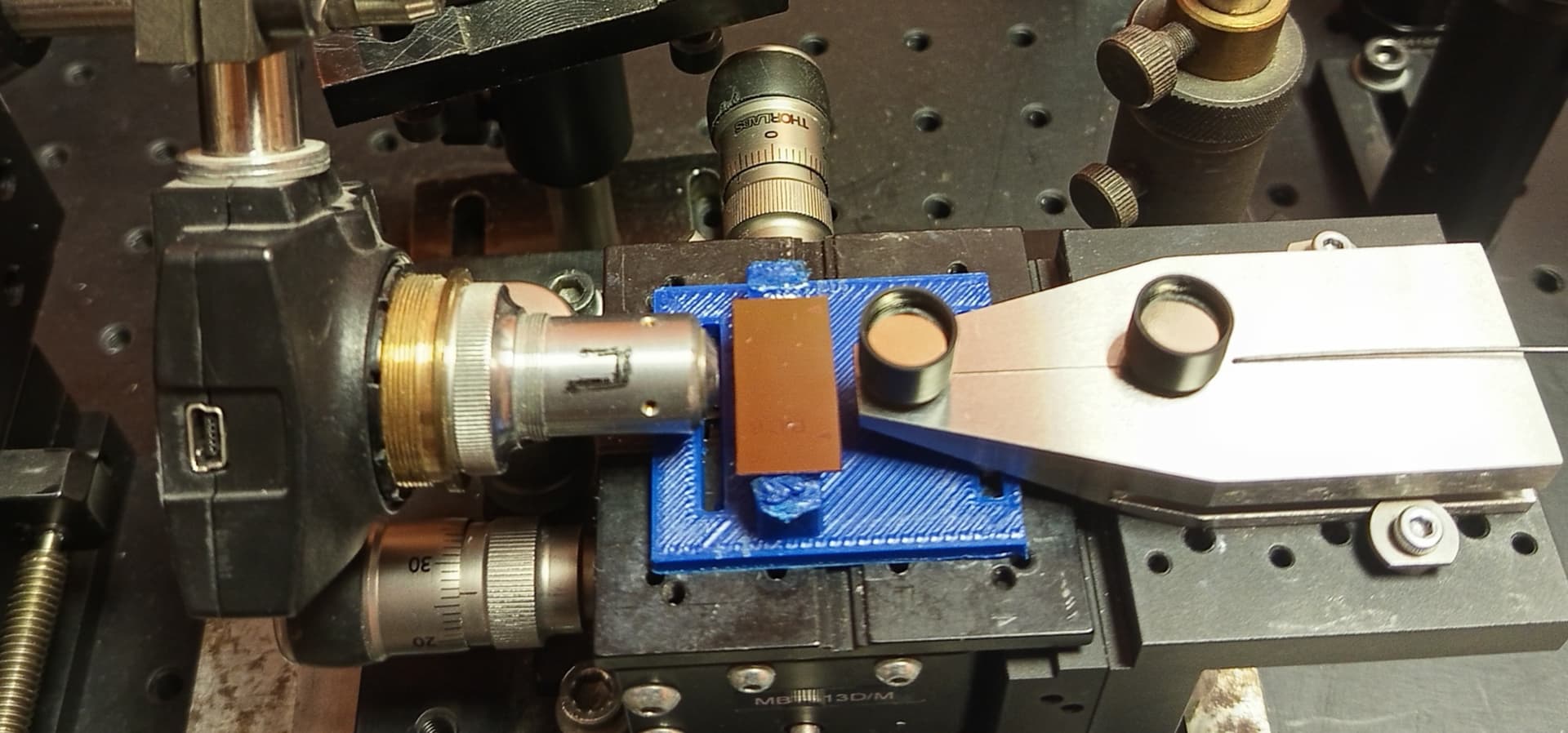
Latvian deep tech startup AP4PIC is developing polymer integrated photonic microchips – a technology that could transform the microchip and optical sensor industry in the future by enabling information processing with light instead of electricity. The company was established in July 2024 as a research spin-off of the Institute of Solid-State Physics of the University of Latvia and is currently developing the first prototypes in collaboration with Riga Technical University.
“AP4PIC falls into the category of so-called deep tech companies, and in this field, a year or two doesn’t really mean much,” says company co-founder Aivars Vembris. “Deep technologies need time – both to develop them and to accumulate knowledge, understand market needs, and adapt their development direction accordingly.”
The company participates in the incubation program for knowledge-intensive companies set up by the Investment and Development Agency of Latvia, and Mr Vembris notes that this provides significant financial and practical support. “Of course, there are many benefits. One of those being financial support, which allows us to cover basic costs, such as premises or accounting, and to allocate funds to technology development and research,” he explains. “Another big plus is that, as part of the incubation program, we can purchase the necessary equipment, which otherwise might not be possible. This allows us to act more freely and develop more rapidly, without having to attract external investors at this stage of development and maintaining the company’s independence.”
Aivars Vembris admits that cooperation with LIAA has been simple and straightforward, which, as he jokes in conversation, was a walk in the park after his experience with scientific grant projects. In addition to financial support, AP4PIC also highly values the informative and useful contact support. “The LIAA representative office in Brussels regularly provides us with up-to-date information on industry trends, potential cooperation partners, and various European support mechanisms. This is very practical assistance for a company that is just taking its first steps in the international arena,” says Mr Vembris.
The company’s immediate goal is to develop market-ready prototypes and prepare for the next stage of development. “We are currently growing by using state support instruments, and our plan is to attract investors when the company’s value has increased, and we can start production. The support of the LIAA allows us to focus on this,” Aivars Vembris summarizes.
Information material prepared with the support of the European Regional Development Fund
