The rebirth of railway car manufacturing in Latvia: a new generation of railway innovations being developed in Riga
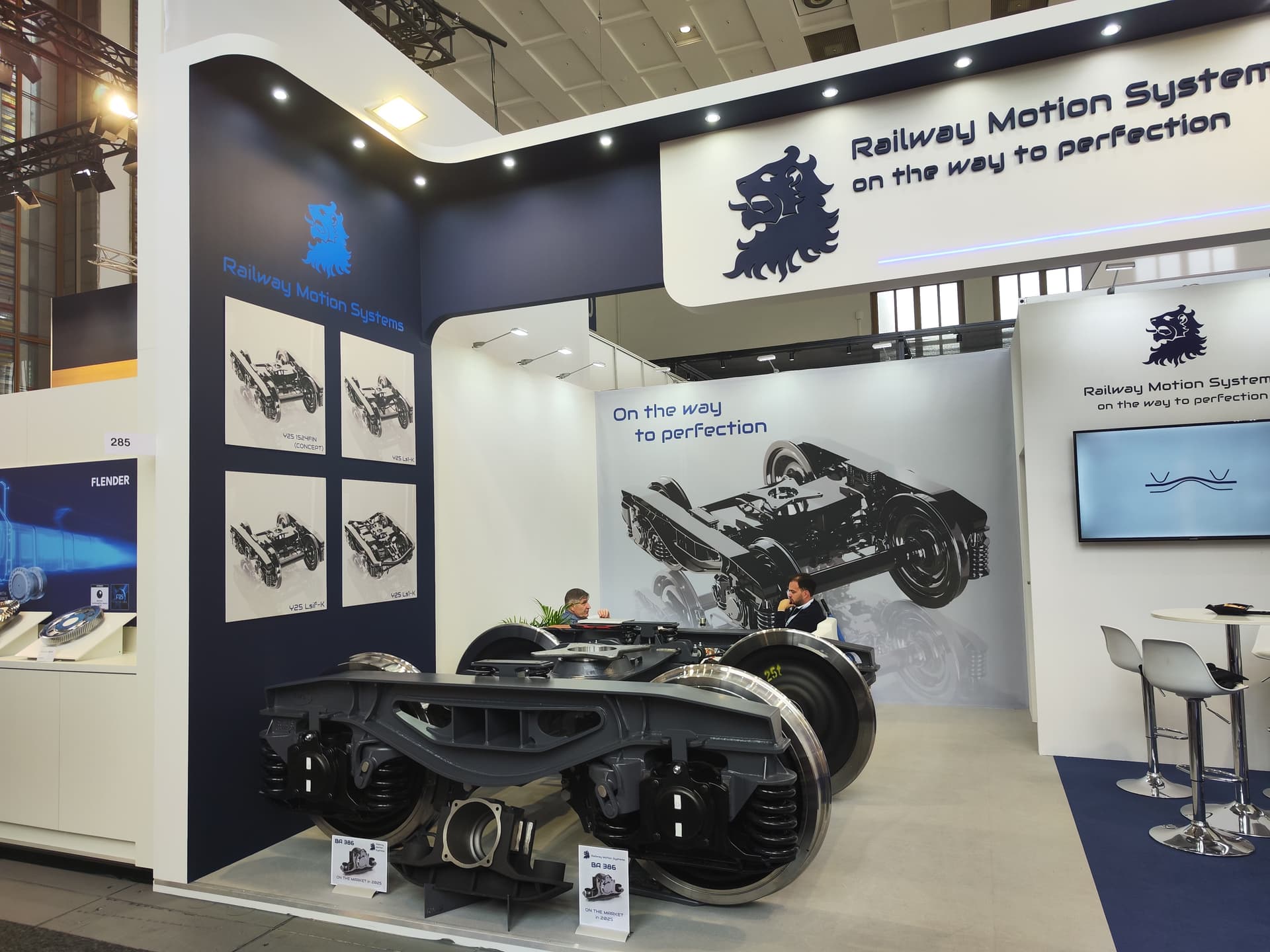
Railway Motion Systems is a Latvian company operating in the field of railway engineering and logistics solutions. Founded in 2022, it brings together a team of professionals with more than 20 years of experience in the railway, logistics, and freight transport industries. The company was created as the result of an innovative, long-term engineering project aimed at solving a Europe-wide issue – the convenient and efficient transfer of freight from roads to railways.
The company currently specialises in the design, prototyping, and manufacture of railway bogies. Bogie wheels are one of the most important elements of a railway wagon as they provide the connection between the rails and the wagon body, absorb dynamic loads and are crucial for safe movement. The company manufactures both two-axle and three-axle railway bogies, ensuring not only the development of these critical components, but also the certification process and the development of various engineering solutions for other wagon manufacturers.
Railway bogies are classified as critical components, the development and certification of which is subject to particularly strict regulations. Railway Motion Systems can boast a significant achievement in this field: the company is currently the only one in the Baltics to have undergone the entire mandatory certification process required by the European Union. This includes specialised welding certification, prototype manufacturing, and dynamic testing at a recognised testing centre in the Czech Republic, where the bogies have undergone 10 million load cycle tests.
The Multiflex project: an innovative intermodal solution
One of the company’s most ambitious and strategically important projects, which the team has been working on for several years, is Multiflex – an innovative intermodal wagon concept that allows semi-trailers to be transferred from trucks to railway wagons without the use of specialised cranes. The solution is designed so that a truck can easily drive up to the wagon, push the trailer onto the structure, which is then lifted and ready for transport by rail.
Multiflex solves a problem that is relevant throughout Europe – statistics show that only about 10% of semi-trailers are technically suitable for lifting with a mobile crane, while traditional terminals require major investments and large areas. The Multiflex system is designed so that a cargo crane is not necessary, thus reducing the need for expensive terminals.
“Such solutions have been discussed in Europe for several decades, but our offer is completely innovative and patented. It is based on modern hydraulic, electromechanical, and automation technologies, the practical application of which was simply not possible before. In the long term, this solution can significantly reduce several problems associated with rail logistics. Calculations show that rail is a more economically viable mode of freight transport, especially when road construction and maintenance costs, infrastructure congestion and environmental targets are taken into account,” says Jurijs Rendenieks, Member of the Board at the company.
Production of bogies for Finnish railways to start in spring
Although the project has not yet reached the stage of serial production, its engineering base is fully developed and ready for the market as soon as the situation in the European railway sector improves.
In parallel with work on the Multiflex solution, Railway Motion Systems is currently actively developing another project in cooperation with partners in Estonia and Finland. The company is working on a new three-axle bogie prototype, which is being developed under the auspices of Finnish Railways and tested in the Czech Republic.
If testing is successful, serial production of the new three-axle bogie is planned to start in Riga in the spring of 2026, with the first deliveries to Finnish Railways scheduled for the summer. It is important to note that Railway Motion Systems will be listed in the certificates for this new product as the manufacturer of critical components, which, as Mr Rendenieks explains, ensures the company’s long-term position in the market and effectively replaces traditional license agreements.
The company’s production facility is located in Riga, on the historic site of the former Riga Carriage Works (Rīgas vagonbūves rūpnīca – RVR), and currently employs 13 people, mainly engineers and welders. With the start of serial production, the company plans to significantly increase its workforce.
Robotisation as a quality standard
Continuing its work on innovation and preparing for serial production, the company has installed a robotic welding line with specialised software at its production facility, which was purchased with co-financing from the Investment and Development Agency of Latvia as part of the Digitalisation Programme. The equipment is worth approximately EUR 170 000–180 000, about half of which was covered by state support.
Robotisation significantly improves welding quality, precision, and repeatability. “Although there was initially scepticism among employees, in practice the new technology has proven itself to be an effective tool that complements rather than replaces human labour,” the company explains.
Currently, the company’s main customers are wagon manufacturers and repair companies, as well as railway operators. Railway Motion Systems is focusing its future development on the Scandinavian and Baltic markets, while also strategically evaluating growth opportunities in the military logistics segment, where demand for secure and certified railway solutions is growing.
Information material prepared with the support of the Recovery Fund. The author is solely responsible for the content of this publication. The views expressed herein do not reflect the official position of the European Union or the European Commission.