Dvoretsky Distillery: the most difficult stage – understanding which support program is suitable
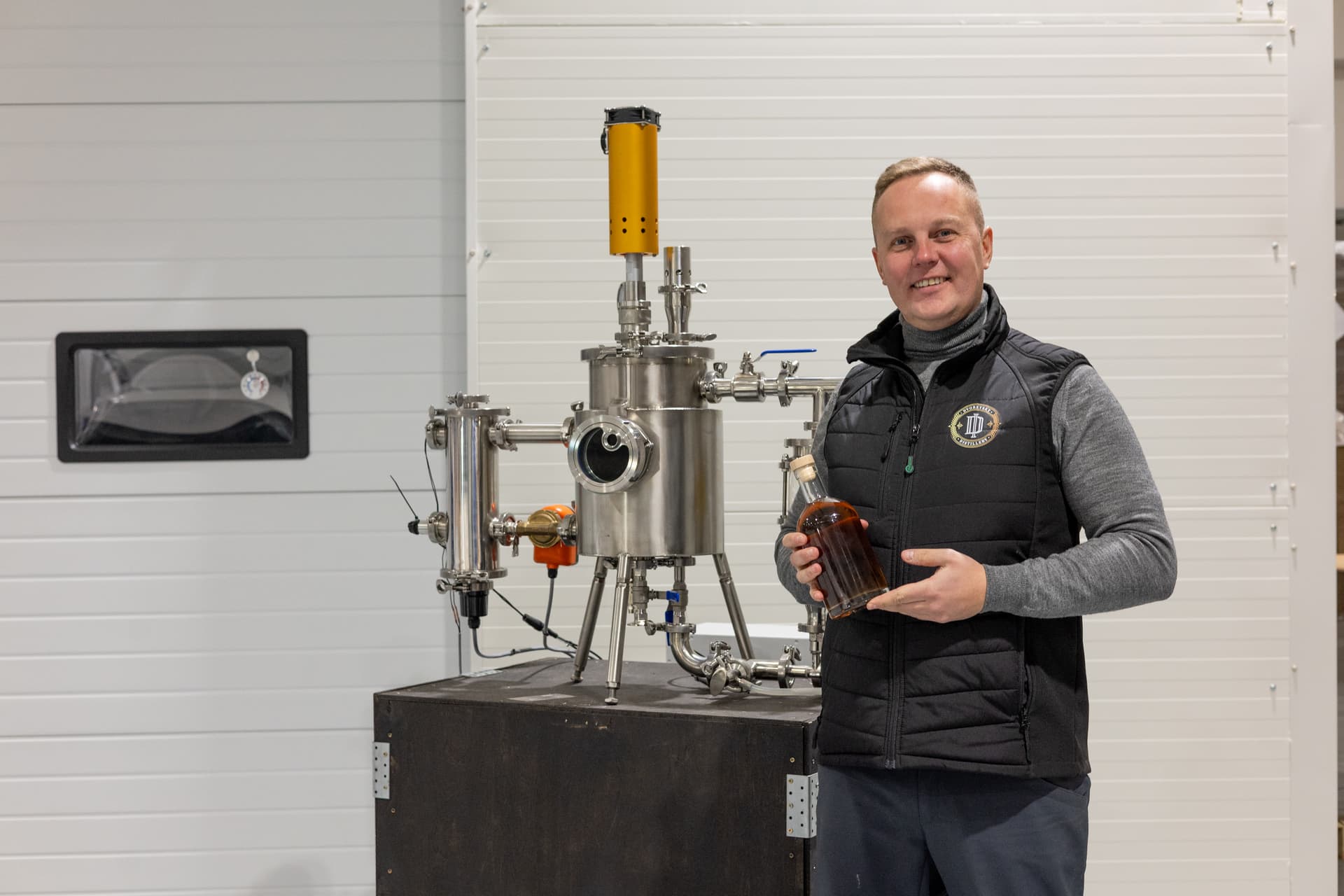
Dvoretsky Distillery is a family business that has been operating in the Latvian market since 2022, offering niche alcoholic and non-alcoholic beverages made according to historical recipes and traditional craft methods. In recent years, the company has also been developing an innovative beverage aging acceleration reactor that simulates the environment of an oak barrel and accelerates the aging process under controlled conditions. In future, the company plans to develop this methodology into an exportable product.
Cooperation with the Innovation Voucher programme of the Investment and Development Agency of Latvia (LIAA) was an important stepping stone that allowed the company to develop a prototype for the equipment, create a methodological basis, and clearly define the next steps in the project’s development. Company representative Ivans Dvoreckis says that, given his experience in public procurement, he was used to dealing with bureaucratic challenges. However, cooperation with the LIAA proved to be significantly different – within the framework of the programme, the company received practical support both in preparing the application and during the project implementation phase.
“It was not easy to find information about the available support instruments and what was suitable for us. Initially, we learned about these opportunities from a consultant who approached us, but we soon became interested ourselves and also consulted with LIAA staff. Even though I regularly follow LIAA information, understanding what exactly would be suitable for us was like groping around in a dark room at first. Over time, the process became clearer and more understandable,” he says.
Once the programme was selected, the process became smoother, and the experience of the Latvian State Institute of Wood Chemistry in similar projects was particularly useful. “Their knowledge was very helpful in preparing the application,” Mr Dvoreckis recalls. “The LIAA staff were also a great help – they were very responsive, helped us formulate specific things, and even advised us on how best to phrase them.”
At the same time, he emphasises that regulations, such as the requirement to conduct a price survey among scientific institutions, sometimes create unnecessary bureaucracy, in his opinion, because in a narrow field, there is practically just the one choice to go with. However, he believes that state support tools are invaluable, especially for smaller companies, as they enable innovation and research that would not be possible with traditional funding.
Mr Dvoreckis also suggests that the LIAA could develop support for the implementation of such projects as a paid service, which would be more cost-effective than using external consultants, while acknowledging: “The responsiveness of LIAA staff is excellent, and advice is never refused. My feedback on the staff is the best.”
Information material prepared with the support of the European Regional Development Fund